
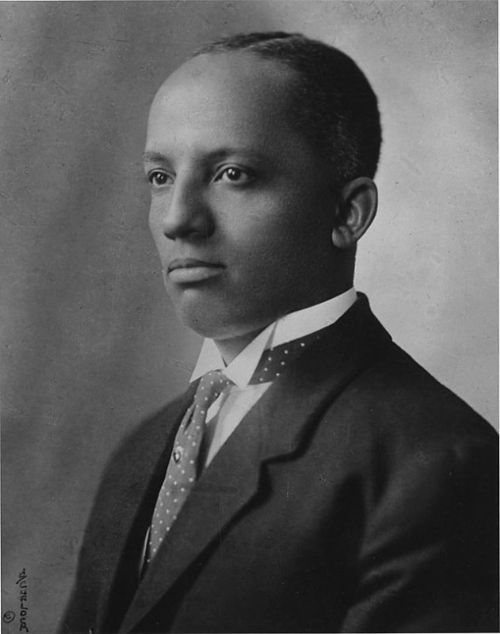
Carter G. Woodson: The Father of Black History
Early Life and Education
Woodson's early life exemplified the challenges faced by African Americans in the post-Reconstruction era. Born in New Canton, Virginia, he spent his youth working as a sharecropper and miner to help support his family. Despite beginning his formal education late, Woodson's thirst for knowledge was unquenchable. He taught himself the fundamentals of common school subjects and eventually earned his high school diploma at the age of 20.
His pursuit of education continued with remarkable determination. After completing his undergraduate studies at Berea College in Kentucky, Woodson taught in the Philippines and traveled throughout Asia and Europe. He earned his master's degree from the University of Chicago and made history by completing his doctorate in history from Harvard University in 1912, joining W.E.B. Du Bois as only the second African American to achieve this distinction.
The Birth of Black History Month
Perhaps Woodson's most enduring legacy began in 1926 when he established Negro History Week, which would eventually evolve into Black History Month. He chose February because it coincided with the birthdays of Abraham Lincoln and Frederick Douglass, two figures who had profoundly impacted African American history. Through this initiative, Woodson sought to ensure that school children would learn about Black history in a systematic way.
Woodson believed that education about Black history was essential not only for African Americans but for all Americans. He famously wrote, "Those who have no record of what their forebears have accomplished lose the inspiration which comes from the teaching of biography and history." This philosophy drove his lifelong mission to document and preserve Black history.
Academic Contributions and Publications
Woodson's scholarly contributions were revolutionary for their time. In 1915, he founded the Association for the Study of Negro Life and History (now the Association for the Study of African American Life and History). The following year, he established The Journal of Negro History, which remains a crucial academic publication today under the name The Journal of African American History.
His most influential book, "The Mis-Education of the Negro" (1933), critically examined how the American education system failed African American students. The book's central argument—that African Americans were being culturally indoctrinated rather than truly educated—remains relevant to contemporary discussions about education reform and racial equity.
Legacy and Continuing Impact
Woodson's work laid the groundwork for the academic field of Black studies and helped establish African American history as a legitimate area of scholarly inquiry. His efforts to document and preserve Black history came at a time when many institutions were actively working to erase or diminish African American contributions to American society.
Modern scholars and educators continue to build upon Woodson's foundation. His emphasis on using history as a tool for social understanding and change has influenced generations of historians, educators, and activists. The organization he founded continues to set the theme for each year's Black History Month celebration, ensuring that new aspects of African American history and achievement are highlighted and studied.
Educational Philosophy and Modern Relevance
Woodson's educational philosophy was remarkably progressive for his time. He advocated for what we would now call culturally relevant education, arguing that all students benefit from learning about diverse historical perspectives. He believed that understanding Black history was crucial for:
- Building self-respect and dignity among African Americans
- Creating interracial understanding
- Creating a more accurate and complete picture of American history
- Inspiring future generations to achieve their full potential
Today, as conversations about representation in education and the importance of diverse historical perspectives continue to evolve, Woodson's work and ideas remain deeply relevant. His vision of history as a tool for social transformation and his emphasis on the importance of knowing one's cultural heritage continue to influence educational policy and practice.
When we celebrate Black History Month each February, we are not only commemorating African American achievements but also honoring Carter G. Woodson's revolutionary vision of history as a pathway to understanding, dignity, and social progress. His life's work reminds us that the study of history is not merely about learning facts from the past—it's about shaping how we understand ourselves and our society in the present and future.
 Visitor Comments (0)